

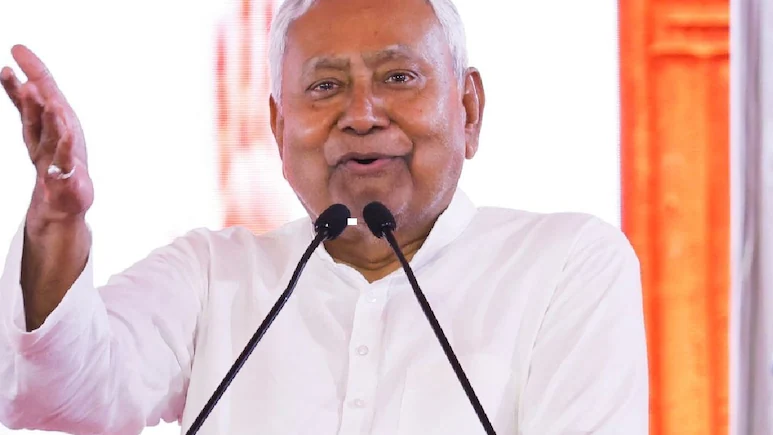
The upcoming Bihar Assembly elections 2025 are shaping up to be one of the most intriguing political battles in recent years. With the NDA, led by Nitish Kumar and backed by the BJP, on one side, and the INDIA bloc comprising RJD and Congress on the other, Bihar finds itself at the center of national political strategies.
Coalition politics in India has always been complex, but Bihar takes it a step further. Multiple parties, shifting loyalties, and new entrants make this election more unpredictable than ever. The results will not only decide who governs Bihar but could also redraw power equations at the national level.
Nitish Kumar: The Key Player in Bihar’s Politics
Nitish Kumar, serving his ninth term as Chief Minister, continues to be the central figure in Bihar politics. Despite health concerns and repeated party-switching in the past, he remains indispensable for the BJP.
The BJP cannot risk losing Nitish, as denying him the CM post could push him back towards the RJD or INDIA bloc. At the same time, a victory under Nitish’s leadership may increase his bargaining power in Delhi, especially since the BJP-led central government depends heavily on allies like JD(U), TDP, and LJP(RV).
Positive for Nitish Kumar & JD(U):
Strong support among women voters, non-Yadav OBCs, Mahadalits, and Pasmanda Muslims.
Welfare schemes such as ₹10,000 per month for women entrepreneurs have consolidated his social base.
Negative for BJP:
- An NDA win under Nitish may weaken BJP’s dominance in Bihar.
- Failure to replace Nitish could delay BJP’s long-term goal of leading Bihar directly.
Opposition INDIA Bloc: RJD, Congress & Rahul Gandhi’s Push
On the opposition front, the Mahagathbandhan (INDIA bloc) led by the RJD and Congress is attempting to dethrone the NDA. Rahul Gandhi’s “Voter Adhikar Yatra” drew crowds across the state, raising questions about alleged voter roll manipulation.
However, the RJD’s Tejashwi Yadav responded with his own “Bihar Adhikar Yatra,” focusing more on issues like unemployment, inflation, corruption, and women’s safety. This has led to speculation of a power tussle within the alliance over the CM face.
Positive for the INDIA Bloc:
Rahul Gandhi’s renewed presence in Bihar gives Congress bargaining strength.
Tejashwi Yadav continues to mobilize the traditional Muslim-Yadav (M-Y) vote bank.
Negative for the INDIA Bloc:
- Congress’s demand for 70 seats may strain seat-sharing negotiations.
- Lack of a clear CM candidate could confuse voters and weaken campaign messaging.
New Entrants: The Role of Prashant Kishor
Adding to the mix is political strategist-turned-politician Prashant Kishor, whose padyatras and outreach campaigns have made him a familiar face. His Jan Suraaj Party (JSP) may not win big, but it could cut into the vote share of established players, reshaping Bihar’s political balance.
Many in Bihar believe Kishor represents the demand for new leadership, beyond the decades-old faces of Nitish and Lalu’s family.
National Impact of Bihar’s Election
The Bihar elections are more than a state contest—they have the potential to reshape national politics:
- If NDA Wins: Nitish remains crucial, strengthening JD(U)’s role in Delhi. Chirag Paswan may also demand greater influence.
- If NDA Loses: BJP could weaken Nitish’s hold by attracting JD(U) MPs, boosting its own dominance in the long term.
- For Congress: A strong performance will boost Rahul Gandhi’s profile in the Hindi heartland, but it may create friction with allies like RJD and SP.
Bihar has historically played a major role in Indian politics—from the JP movement of the 1970s to the rise of OBC leadership. The 2025 elections may once again set the tone for larger political changes in the country.
Conclusion
The Bihar elections 2025 are not just about who becomes Chief Minister. They are about alliances, bargaining power, and the future of coalition politics in India.
- For the NDA, victory means dependence on Nitish Kumar continues.
- For the INDIA bloc, it’s a chance to regain lost ground, though internal conflicts loom large.
- For voters, it’s a test of whether old loyalties or the demand for new leadership will prevail.
Whatever the outcome, the political ripples from Patna will reach Delhi, influencing strategies for upcoming national contests.
