
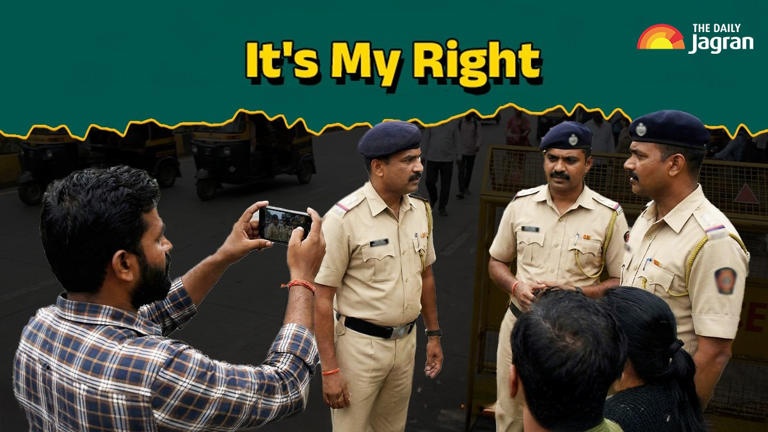
With smartphones everywhere, citizens increasingly record police actions during public interactions. But can the police legally stop you from recording them? Can they snatch or seize your phone? Indian law offers important protections—but also clear limits.
Here’s what you should know.
Is It Legal to Record Police in India?
Yes — in most public places
Under Indian law, recording police actions in public spaces is generally legal, provided you are:
- In a public place
- Not obstructing police duties
- Not recording in a prohibited or restricted area
Public roads, streets, railway stations (non-restricted areas), and public offices usually fall under this category.
Reason: There is no reasonable expectation of privacy for public officials performing public duty in public.
When Can Police Ask You to Stop Recording?
Police may lawfully ask you to stop recording if:
- You are hindering or obstructing their official work
- The situation involves national security, defence, or restricted installations
- You are filming inside courts, police stations, or secure premises without permission
- Your recording could incite violence or panic
Simply recording from a distance, without interference, is not illegal.
Can Police Seize or Snatch Your Phone?
Police cannot arbitrarily seize your phone
Under Indian law:
- Police cannot snatch your phone without following due legal process
- Any seizure must comply with Section 102 of the Criminal Procedure Code (CrPC) (or corresponding BNSS provisions)
- A seizure memo (panchnama) must be prepared
- You are entitled to a receipt of seized property
Snatching or forceful deletion of videos without legal authority can itself be illegal.
Can Police Force You to Delete Videos?
No — deletion without court order is illegal
Police cannot force you to delete photos or videos unless:
- There is a valid court order
- The content is illegal (e.g. child abuse material, national security violations)
Forcing deletion without authority may violate:
- Article 19(1)(a) – Freedom of speech and expression
- Article 21 – Right to personal liberty
What Courts Have Said
Indian courts have repeatedly held that:
- Citizens have the right to document public acts of officials
- Transparency strengthens democracy
- Abuse of power must be accountable
Courts have also criticised unlawful phone seizures and intimidation.
Important Dos and Don’ts While Recording Police
DO:
- Stay calm and respectful
- Record from a safe distance
- Ask politely if questioned
DON’T:
- Interfere with police operations
- Use abusive language
- Enter restricted or cordoned-off zones
Recording responsibly protects both your rights and your safety.
What Should You Do if Police Act Illegally?
If police unlawfully stop you, seize your phone, or delete content:
- Ask under which law they are acting
- Request a seizure receipt
- Note officer badge numbers
- File a written complaint or approach court if needed
Always remain non-confrontational.
Final Take
Yes, you generally have the right to record police actions in public places in India. Police cannot stop you, seize your phone, or force deletion without legal basis. However, this right comes with responsibility—do not obstruct law enforcement or violate security restrictions.
Knowing the law is your strongest protection.
