

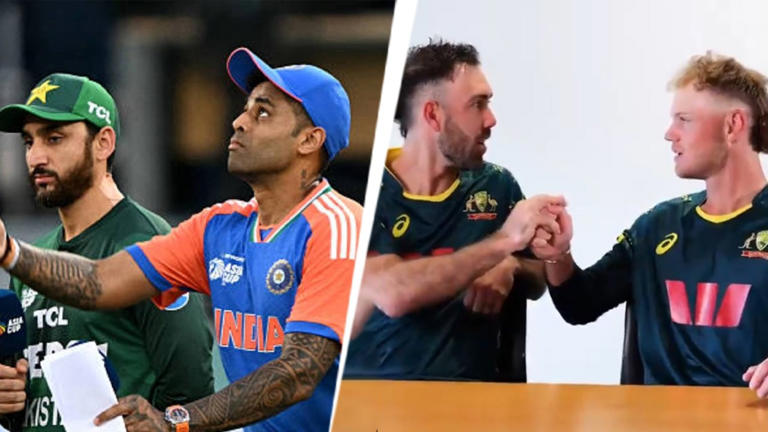
Australian cricketers created significant controversy with a now-deleted promotional video that mocked India’s decision to avoid handshakes with Pakistani players during the Asia Cup 2025, sparking diplomatic tensions ahead of the India-Australia bilateral series.
The Controversial Video Content
Kayo Sports Promotional Campaign
The promotional video, originally posted by Kayo Sports and later removed due to backlash, featured prominent Australian cricketers including Josh Hazlewood, Glenn Maxwell, Mitchell Marsh, Jake Fraser-McGurk, and Grace Harris, along with women’s team members like Sophie Molineux and captain Alyssa Healy.
Key Statements from the Video
The video’s anchors Ian Higgins and Sam Perry made pointed remarks about India’s stance :
“We all know India is on its way. But we’ve identified one critical weakness” – emphasizing India’s approaching tour to Australia.
“We know they’re not huge fans of the traditional greeting, so we can throw them off before we’ve even bowled a ball” – directly referencing India’s no-handshake policy with Pakistan.
Player Participation and Gestures
Alternative Greeting Suggestions
Australian players participated by suggesting alternative greeting methods :
- Glenn Maxwell and Jake Fraser-McGurk: Proposed fist-bumps that went deliberately wrong
- Mitchell Marsh: Suggested the “finger in the ice cup” celebration popularized by Travis Head
- Josh Hazlewood: Added a provocative gun-hand gesture, asking “What about the shooter?”
- Alyssa Healy: Proposed the “Healy Hands” celebration
Most Controversial Moment
The most contentious part involved women’s spinner Sophie Molineux, who raised her hands before making a blurred gesture widely interpreted as showing her middle fingers. This action, combined with players laughing together, suggested deliberate mockery rather than harmless banter.
Context Behind India’s No-Handshake Policy
Pahalgam Terror Attack Response
India’s handshake refusal stemmed from solidarity with victims of the Pahalgam terror attack in April 2025, which claimed 26 lives. The Indian Armed Forces launched Operation Sindoor in retaliation, targeting terror camps in Pakistan and Pakistan-occupied Kashmir.
Captain Suryakumar Yadav’s Leadership
During the Asia Cup 2025, Indian captain Suryakumar Yadav led the no-handshake stance against Pakistan across all three encounters. He later explained the gesture as a tribute to terror attack victims and dedication to the Indian armed forces.
Escalating India-Pakistan Tensions
Mutual ICC Complaints
The handshake controversy led to formal complaints filed with the International Cricket Council :
Pakistan’s Complaint: Against Indian players for unsportsmanlike conduct regarding handshake refusal
India’s Counter-Complaint: Against Pakistani players Haris Rauf and Sahibzada Farhan for provocative gestures, including:
- Rauf’s “jet crashing” and “6-0” finger signs
- Farhan’s rifle mimicry during matches
Trophy Ceremony Boycott
The tensions culminated during the Asia Cup trophy presentation, where Indian players refused to accept the trophy from ACC chairman Mohsin Naqvi, who also serves as Pakistan’s Interior Minister. The ceremony remained incomplete with the trophy removed from the podium without formal handover.
Australian Video Backlash and Removal
Social Media Criticism
The video faced immediate and widespread criticism on social media platforms. Critics questioned why Australian media and players were making light of a stance that India presented as national solidarity and mourning for terror victims.
Kayo Sports Response
Following the significant backlash, Kayo Sports deleted the video from their social media platforms. The removal indicated recognition that the content had crossed boundaries of acceptable sporting banter.
Upcoming Series Stakes
Mind Games Before Competition
The controversial video represents the beginning of psychological warfare ahead of the India-Australia white-ball series. Australia appears to be testing India’s resolve and potentially attempting to unsettle the visiting team before competition begins.
Series Details
The much-anticipated series features :
- Three ODIs: Starting October 19 in Perth, featuring returns of Rohit Sharma and Virat Kohli
- Five T20Is: Beginning October 29 in Canberra under Suryakumar Yadav’s captaincy
- Leadership Changes: Shubman Gill captains ODI team, Mitchell Marsh leads Australia in both formats
Diplomatic and Sporting Implications
Cross-Border Sensitivity
The incident highlights how geopolitical tensions between India and Pakistan continue influencing cricket, with third-party nations like Australia now becoming involved in the diplomatic complexities.
Sportsmanship Questions
The controversy raises questions about the boundaries between competitive banter and respect for political sensitivities, particularly when dealing with terrorism-related grief and national mourning.
Impact on Series Atmosphere
Pre-Series Tension
The video has already created additional tension before the first ball is bowled, potentially affecting the competitive atmosphere and fan relations during India’s tour of Australia.
Team Responses
While the Australian video was deleted, no official statements have emerged from either cricket board addressing the controversy, leaving the diplomatic implications unresolved as the series approaches.
The incident demonstrates how modern cricket increasingly intersects with geopolitical issues, creating challenges for maintaining pure sporting competition amid broader regional tensions and diplomatic sensitivities.
