

What Happened During the Police Raid in Brazil?
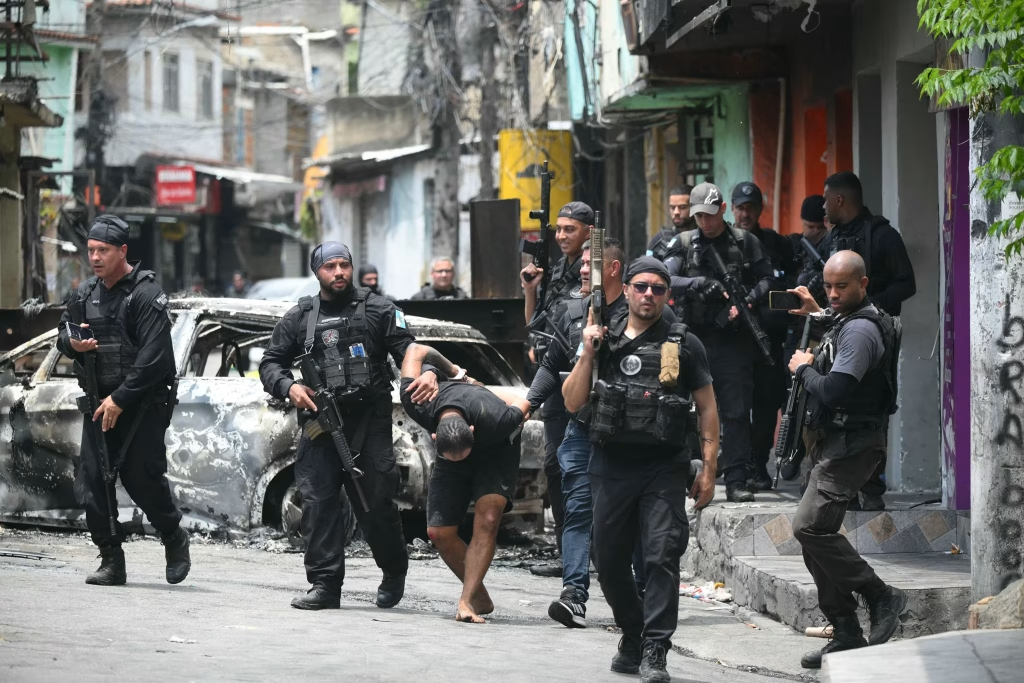
One of the deadliest police raids in Brazil’s history unfolded during a large-scale operation in a densely populated favela, turning what authorities described as a crime-control mission into a deadly bloodbath.
The raid, carried out by elite police units, resulted in dozens of deaths, including suspected gang members and civilians, triggering widespread condemnation from human rights groups and civil society.

Where the Raid Took Place
The operation occurred in Rio de Janeiro, a city long plagued by violent clashes between police and criminal gangs operating in informal settlements known as favelas.
According to officials, police entered the area to target armed drug traffickers. However, the operation quickly spiralled into chaos as heavy gunfire erupted across narrow lanes packed with residents.
How the Operation Escalated
Eyewitnesses reported:
- Continuous gunfire for several hours
- Armoured vehicles entering residential lanes
- Residents trapped inside their homes
Authorities claimed officers came under intense fire, forcing them to retaliate. Critics, however, argue that excessive force was used without adequate safeguards for civilians.
Death Toll and Casualties
Official figures confirmed:
- Over 25 people killed in the raid
- No confirmed civilian evacuation prior to the operation
- Multiple injuries reported among residents
Human rights organisations described the incident as a massacre, questioning the planning and execution of the raid.
Police and Government Response
The Brazilian Police defended the operation, stating it was necessary to dismantle heavily armed criminal networks.
Brazilian authorities said:
- Weapons and drugs were recovered
- Officers acted in self-defence
- The operation followed intelligence inputs
An internal inquiry was later ordered amid mounting public pressure.
Human Rights Groups Raise Alarm
International and local human rights groups strongly criticised the raid, pointing out:
- Disproportionate use of lethal force
- Lack of accountability in past operations
- Repeated targeting of poor and marginalised communities
The incident revived debates over police militarisation and racial inequality in Brazil.
Why Police Raids in Brazil Are So Deadly
Experts say several factors contribute:
- Heavily armed criminal gangs
- Militarised policing strategies
- Poor intelligence coordination
- Dense living conditions in favelas
Brazil records one of the highest numbers of police killings globally, a statistic that continues to draw international concern.
Public Outrage and Protests
Following the raid:
- Protests erupted in multiple neighbourhoods
- Families demanded justice for victims
- Social media campaigns called for police reform
The tragedy once again exposed the fragile relationship between law enforcement and favela communities.
Conclusion
Brazil’s deadliest police raid stands as a grim reminder of the human cost of aggressive policing tactics. While authorities insist the operation was necessary, critics argue that the bloodshed highlights systemic failures in public security and governance.
As investigations continue, the incident has intensified calls for urgent police reform and stronger civilian protections in Brazil.
