

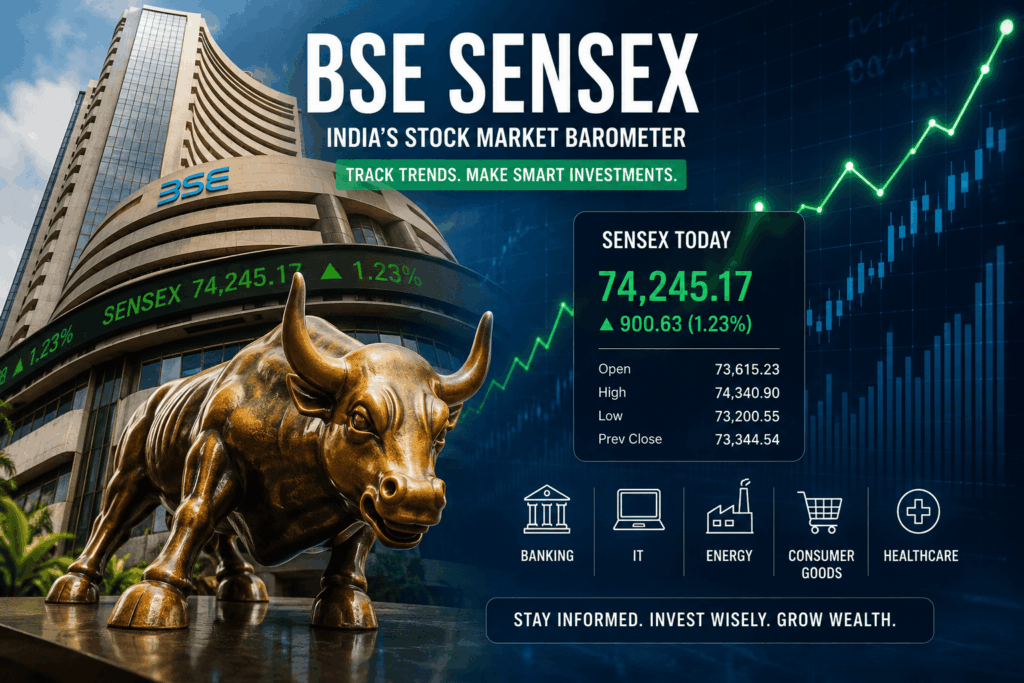
BSE Sensex Remains the Heartbeat of India’s Stock Market
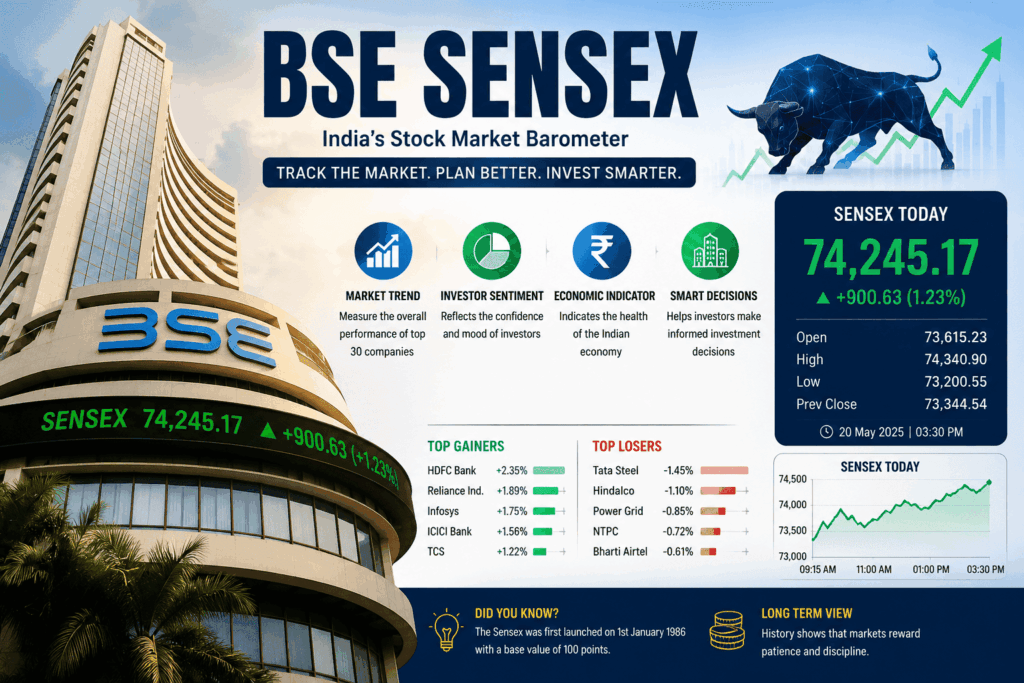
Whenever the Indian stock market opens, one number grabs everyone’s attention—the BSE Sensex. Whether you’re an experienced investor or someone just beginning to learn about the stock market, the Sensex is one of the most important indicators of India’s economic health.
Every rise and fall in the Sensex reflects investor sentiment, corporate performance, global market trends, and the overall direction of the Indian economy.
Here’s everything you need to know about the BSE Sensex and why millions of Indians follow it every day.
What Is the BSE Sensex?
The BSE Sensex, also known as the S&P BSE Sensex, is India’s benchmark stock market index.
It represents the performance of 30 of the largest and most financially strong companies listed on the Bombay Stock Exchange (BSE).
These companies belong to different sectors, including:
- Banking
- Information Technology
- Automobile
- Healthcare
- Energy
- Consumer Goods
- Finance
Since these companies account for a significant portion of India’s market value, the Sensex serves as a key indicator of the country’s stock market performance.
Why Is the Sensex Important?
The Sensex helps investors understand whether the market is moving upward or downward.
When the Sensex rises:
- Investor confidence generally improves.
- Companies often report better performance.
- Market sentiment becomes more optimistic.
When the Sensex falls:
- Investors may become cautious.
- Global uncertainty or economic concerns could be affecting markets.
- Profit booking or weak earnings may influence stock prices.
Although daily fluctuations are normal, long-term trends often provide a clearer picture of market performance.
Factors That Affect the BSE Sensex
Several domestic and international factors influence the Sensex every day.
1. Company Earnings
Strong quarterly results from major companies can push the index higher, while disappointing earnings may lead to declines.
2. RBI Policies
Changes in interest rates or monetary policy announced by the Reserve Bank of India can significantly impact investor confidence.
3. Global Markets
Indian markets often react to movements in:
- US stock markets
- European markets
- Asian markets
International economic developments can influence trading sentiment in India.
4. Inflation and Economic Data
Data related to inflation, GDP growth, employment, and industrial production also affects market direction.
5. Foreign Institutional Investors (FIIs)
When foreign investors invest heavily in Indian equities, the Sensex often benefits. Conversely, large-scale selling by FIIs can put pressure on the index.
How Does the Sensex Affect Ordinary People?
Many people believe the stock market only affects investors. In reality, the Sensex influences millions of Indians in different ways.
A strong stock market can:
- Boost retirement savings through mutual funds.
- Improve investor confidence.
- Encourage business expansion.
- Create employment opportunities.
A weak market may affect investment returns and business sentiment, though long-term investors often focus on broader trends rather than short-term fluctuations.
Tips for New Investors
If you’re new to investing:
- Invest with a long-term perspective.
- Diversify your portfolio.
- Avoid making decisions based on daily market swings.
- Research before investing.
- Consider consulting a qualified financial advisor if needed.
Successful investing is usually built on patience and discipline rather than reacting to short-term market movements.
What Could Influence the Sensex in the Coming Months?
Market experts will be watching:
- Corporate earnings reports
- Inflation trends
- RBI policy decisions
- Global economic developments
- Foreign investment flows
- Government policy announcements
These factors could shape the direction of the Indian stock market in the months ahead.
Final Thoughts
The BSE Sensex is more than just a number—it reflects the confidence of investors, the performance of India’s leading companies, and the broader direction of the economy.
While short-term ups and downs are a natural part of investing, understanding what drives the Sensex can help investors make more informed decisions. For long-term investors, staying informed, remaining patient, and focusing on financial goals are often more important than reacting to daily market movements.
