

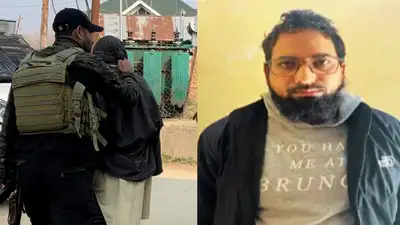
The recent Faridabad Terror Module incident near Delhi’s Red Fort has brought to light a deeply concerning terror module operating in Faridabad, Haryana. Central to this plot is Imam Irfan Ahmad, a former paramedical staff member and radical preacher from Shopian, Jammu and Kashmir, whose role in radicalising young, educated medical professionals has alarmed security agencies across India. This post delves into how Ahmad masterminded this terror network, pushing medical students into extremist ideologies linked to Pakistan-based Jaish-e-Mohammed (JeM), the module’s operations, and the unfolding investigation.

Background: From Healthcare to Extremism
Irfan Ahmad initially served as paramedical staff at the Government Medical College (GMC) in Srinagar. During his tenure, he actively engaged with students and worshippers at a mosque in Nowgam. His interactions evolved beyond spiritual guidance, as he began to spread radical thoughts among medical students, who traditionally enjoy societal respect and operate in crucial sectors. This transformation from healthcare worker to radical preacher marks a troubling shift in the modality of extremist recruitment.
Radicalisation via Medical Students
Ahmad deployed a calculated approach, regularly sharing propaganda videos from Jaish-e-Mohammed, a proscribed terror group based in Pakistan, to slowly indoctrinate young minds. These videos and communications — sometimes routed via encrypted VoIP calls to Afghanistan-based handlers — facilitated stealthy ideological subversion without raising immediate suspicion. Ahmad’s primary aim was to implant extremist ideologies within educated youth who could later utilize their professional positions to operate discreetly in society.
Among those radicalised were two doctors, Dr Muzammil Shakeel and Dr Mohammad Umar, who became active agents in advancing this extremist mission. Their involvement highlights an alarming rise in what authorities term “white-collar terrorism,” wherein educated professionals become conduits for terror activities under the guise of legitimate work.
Faridabad terror module: Imam Irfan Ahmad showed Jaish videos to radicalise medical students and the Red Fort Blast
The bomb-making activities directed by Ahmad allegedly took place in Faridabad, with significant seizures including over 350 kilograms of ammonium nitrate and weapons like AK-47 rifles uncovered by police. Notably, Dr Mohammad Umar is believed to have carried out the deadly blast near Delhi’s Red Fort as a panic reaction following the police exposure of the terror module.
Investigators uncovered that the entire module was conceptualised and managed by Ahmad, underscoring his mastermind role in coordinating cross-regional terror operations. The scale and sophistication of this operation signal a significant threat to national security, as these educated individuals mask terror under professional façades.
Financing and Support from Women’s Wing
The probe further revealed the involvement of Dr Shaheen Sayeed, a faculty member at Al-Falah University in Lucknow, suspected of financing the operation. She is believed to serve as the India commander for Jaish-e-Mohammed’s women’s wing, Jamaat-ul-Mominaat, which aids extremist activities through logistical and financial support. This link demonstrates the structured, multi-layered support system facilitating terror beyond just recruitment and attacks.
Arrests and Ongoing Investigation
Seven suspects, including Ahmad and the doctors involved, have been arrested by Jammu and Kashmir Police. The National Investigation Agency (NIA) now leads investigations to dismantle the network fully. Authorities emphasize the need for vigilance in educational institutions, especially where vulnerable youth can be radicalized under seemingly benign circumstances.
Conclusion: Vigilance Against White-Collar Terror
The Faridabad terror module serves as a stark reminder of the evolving face of terrorism, exploiting educated professionals in critical fields. Imam Irfan Ahmad’s case underscores the importance of counter-radicalisation measures within academic and healthcare sectors. Strengthening intelligence, fostering awareness on extremist signs, and encouraging reporting can thwart such dangerous plots in the future.
If you found this analysis insightful, stay updated with verified news and security advisories to contribute to a safer society.
