

India skipper KL Rahul delivered a brutally honest assessment after his team failed to defend a mammoth 358 in the second ODI against South Africa in Raipur. Despite centuries from Virat Kohli and Ruturaj Gaikwad setting up what looked like a winning total, India went down by four wickets as the Proteas pulled off their highest successful ODI chase in India. Speaking at the post-match presentation, the KL Rahul post match reaction combined self-criticism, tactical insight and praise for his batters, while underlining just how decisive conditions and the toss were on the night.
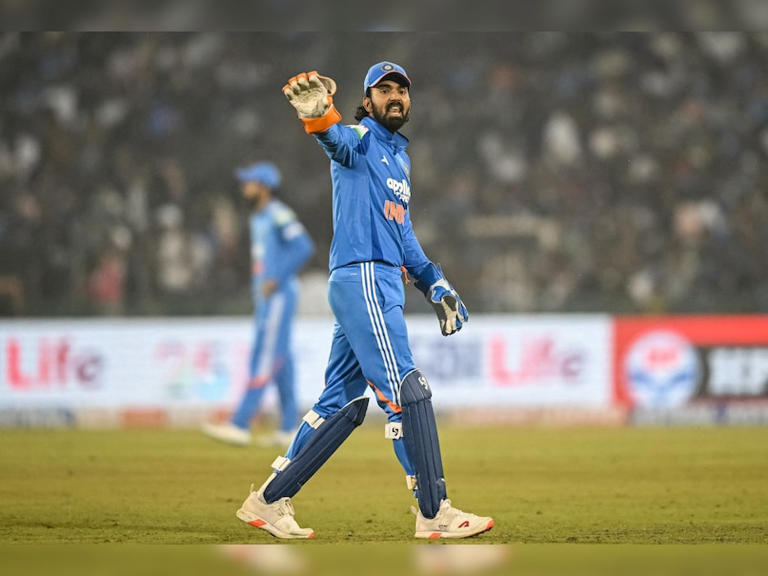
Toss, Dew And “Kicking Myself”
Rahul lost the toss for the second straight game in the series and was asked to bat first again. While India piled up 358/5, heavy dew later made life extremely difficult for the bowlers.
In his KL Rahul post match comments, he said:
- “Not really a tough one to swallow, given how much dew there is and how difficult it is to bowl in the second innings.”
- He pointed out that in the previous game India had managed the wet ball better, helped by the umpires agreeing to change the ball when it became too soggy.
- “Toss plays a big role, so I’m kicking myself (laughs),” he admitted, half-joking, half-acknowledging how much the coin flip shaped the contest.
Rahul’s remarks highlight a recurring ODI theme in India: once dew sets in, even a total near 360 can feel 20–30 short.
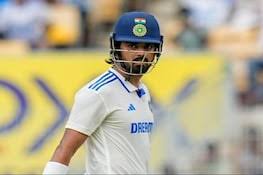
“We Needed 20–25 More”: Batting Still Has Room To Grow
Even after posting 358, Rahul felt India could have been more ruthless with the bat. In his KL Rahul post match breakdown, he said the dressing-room discussion—after both ODIs—has been about squeezing out extra runs.
Key points:
- Rahul said 350 “looks good” on paper, but with a wet ball expected, the target ideally needed to be 20–25 runs higher.
- The thinking is to give bowlers more cushion when gripping and controlling the ball becomes harder in the second innings.
- This shows India’s leadership group is already calibrating totals with specific conditions rather than just historic benchmarks.
Kohli And Gaikwad: Top-Order Brilliance
On the batting front, the KL Rahul post match analysis was full of praise for his top order:
- Virat Kohli:
- Scored 102 off 93 balls—his 53rd ODI hundred—anchoring the innings and rotating strike superbly.
- Rahul pointed out that fans have “seen him do it 53 or 55 times” and that Kohli “just goes about doing his job,” underlining the normalcy with which he produces big knocks.
- Ruturaj Gaikwad:
- Cracked his maiden ODI century, 105 off 83 balls.
- Rahul said it was “beautiful to watch Rutu and the way he batted,” particularly praising how Gaikwad lifted the tempo after reaching his fifty, shifting gears without losing shape.
The combination of Kohli’s experience and Gaikwad’s controlled aggression gave India an ideal platform—another reason the KL Rahul post match comments focused more on execution with the ball and conditions than on batting failures.
South Africa’s Record Chase And Bavuma’s Take
From South Africa’s side, the chase of 362/6 in 49.2 overs was their highest successful ODI run chase in India, a fact not lost on captain Temba Bavuma.
Bavuma’s key points:
- He said the team came into the game focusing on improving with the ball, but it was ultimately their batting partnerships that stood out.
- He highlighted:
- Aiden Markram’s superb 110 anchoring the chase.
- Matthew Breetzke’s 68 and Dewald Brevis’ 54, with Brevis’ promotion up the order described as a ploy that “went in our favour.”
- Bavuma stressed the importance of taking the game deep, building partnerships, and believing they could chase any target against a strong Indian side.
- He also noted that high competition for spots in the South African XI is pushing players to stay at their best, and performances like this boost overall team confidence.
Where India Can Improve From Here
Reading between the lines of the KL Rahul post match remarks, India’s key improvement areas are clear:
- Death bowling with a wet ball: Plans for yorkers, pace-off options, and field placements must be further refined for heavy-dew conditions.
- Finishing with the bat: Even at 358, India’s own internal benchmark suggests aiming for 380+ at certain venues when they know they will bowl second.
- Toss-proof strategies: While toss and dew can’t be controlled, tactical flexibility—such as bowling combinations, use of spinners vs pacers, and field settings—can be optimised for worst-case scenarios.
Rahul’s candid admission that he is “kicking himself” shows he recognises how thin the margins are at this level, especially when facing batting units willing to attack relentlessly.
Conclusion: Honest Captaincy And Hard Lessons
The KL Rahul post match interview offered a blend of accountability, tactical awareness and team-first mindset. He didn’t hide behind the scorecard, even at 358, and openly talked about needing extra runs and smarter planning for dew. At the same time, he gave full credit to Kohli, Gaikwad and a fearless South African chase.
For Indian fans, there are two simultaneous truths:
- India’s batting, led by Kohli’s reliability and Gaikwad’s rise, remains world-class.
- To consistently win high-scoring ODIs at home, especially under lights, the team must keep evolving its bowling and total-setting strategy.
If India absorb these lessons, this loss could become a crucial chapter in their preparation for future home ODI tournaments—where conditions, not just opponents, will continue to test their adaptability.
