

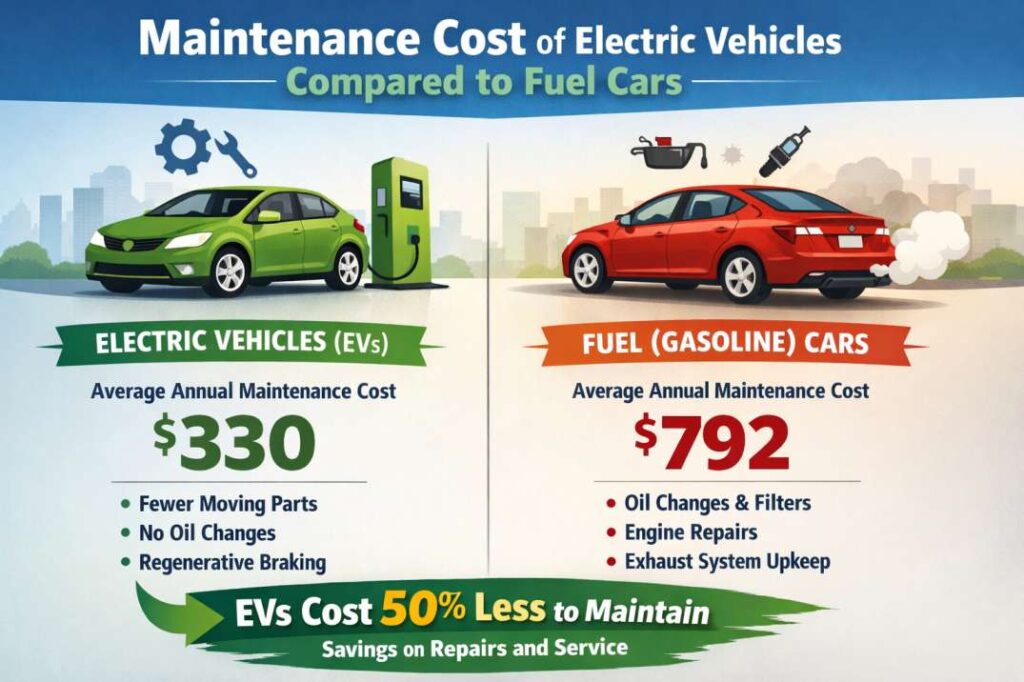
As Electric Vehicles (EVs) become more popular, one of the most common questions among car buyers is: Are EVs really cheaper to maintain than petrol or diesel cars? While the purchase price of an electric vehicle may be higher, maintenance costs over time tell a very different story.
In this blog, we’ll compare the maintenance costs of electric vehicles vs fuel cars, explain why EVs are generally cheaper to maintain, and help you understand which option makes more financial sense in the long run.
Understanding Maintenance in Fuel Cars
Traditional petrol and diesel cars rely on internal combustion engines with hundreds of moving parts. These components experience regular wear and tear, leading to frequent servicing.
Common maintenance costs in fuel cars include:
- Engine oil and oil filter changes
- Air, fuel, and cabin filter replacements
- Spark plugs or injectors
- Clutch and gearbox servicing
- Exhaust system repairs
- Engine tuning and emission-related repairs
On average, fuel cars require servicing every 6–12 months, depending on usage.
Maintenance Requirements of Electric Vehicles
Electric vehicles operate very differently. They use an electric motor and battery system, which has far fewer moving parts compared to fuel engines.
EVs typically do NOT require:
- Engine oil changes
- Fuel system maintenance
- Exhaust system repairs
- Gearbox or clutch replacement
This significantly reduces routine maintenance costs.
Key Maintenance Cost Comparison
1. Engine vs Electric Motor
Fuel engines require constant lubrication and tuning. EV motors are sealed systems with minimal wear.
Cost impact:
EVs save a substantial amount on engine-related maintenance over time.
2. Oil and Fluid Changes
Fuel cars need regular oil changes and multiple fluid top-ups. EVs only require basic fluids like brake fluid and coolant (for battery cooling).
Cost impact:
EV owners save thousands annually by avoiding oil changes.
3. Brake System Wear
EVs use regenerative braking, which reduces brake pad and disc wear.
Cost impact:
Brake replacements in EVs are less frequent than in fuel cars.
4. Battery Maintenance vs Engine Repairs
EV batteries are designed to last 8–10 years or more and often come with manufacturer warranties. While battery replacement is expensive, it is rare and long-term.
Fuel cars, on the other hand, may face major engine repairs as they age.
Cost impact:
Long-term engine repairs in fuel cars can be as expensive as EV battery replacement.
5. Servicing Frequency
Fuel cars require frequent servicing. EVs typically need annual inspections rather than regular mechanical servicing.
Cost impact:
Lower service visits mean lower labor and servicing costs for EVs.
Average Maintenance Cost Comparison (Estimated)
| Vehicle Type | Annual Maintenance Cost |
|---|---|
| Petrol Car | Higher (frequent servicing) |
| Diesel Car | Higher (complex engine parts) |
| Electric Vehicle | Lower (minimal mechanical wear) |
Over 5–7 years, EV owners can save a significant amount on maintenance alone.
Hidden Savings with Electric Vehicles
Beyond regular maintenance, EVs offer additional savings:
No emission test failures
Fewer breakdowns
Lower service labor costs
Software updates instead of mechanical repairs
These hidden benefits make EV ownership more predictable and cost-efficient.
Are There Any Maintenance Challenges with EVs?
While EVs are cheaper to maintain, there are a few considerations:
Battery replacement cost (long-term)
Limited service centers in some regions
Specialized technicians required
However, as EV adoption grows, these challenges are rapidly reducing.
Which Is Better in the Long Run?
When comparing maintenance costs alone, electric vehicles are clearly more economical than petrol or diesel cars. Although EVs may cost more upfront, their low maintenance requirements balance the cost over time.
For daily commuters and long-term owners, EVs offer better value and fewer unexpected repair expenses.
Conclusion
Electric vehicles have a clear advantage when it comes to maintenance costs. With fewer moving parts, reduced servicing needs, and lower long-term repair expenses, EVs are a cost-effective alternative to fuel cars.
If you’re planning for long-term ownership and lower running costs, an electric vehicle is a smart and future-ready choice.
