

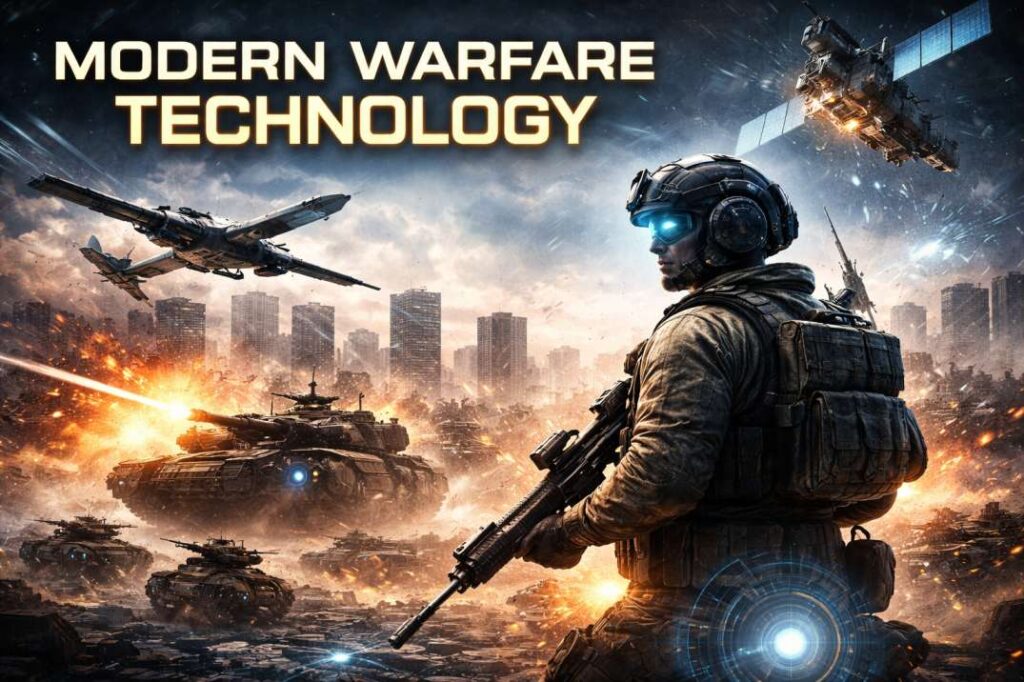
Modern warfare has evolved far beyond traditional weapons and battlefield strategies. In 2026, military power is defined not just by the number of soldiers or weapons, but by the level of technology a country possesses. From artificial intelligence to space-based systems, technology is transforming how wars are planned, executed, and controlled. The integration of advanced systems has made warfare faster, smarter, and more precise.
Today, countries are investing heavily in defense technologies to gain a strategic advantage over their opponents. These innovations are not only improving combat efficiency but also reducing risks to human soldiers. Understanding the top military technologies used in modern wars provides insight into how global conflicts are changing and what the future of warfare might look like.
Artificial Intelligence (AI) in Warfare
Artificial Intelligence (AI) is one of the most powerful technologies shaping modern warfare. It is used to analyze massive amounts of data, identify patterns, and make real-time decisions. AI systems can process information much faster than humans, allowing military leaders to respond quickly to threats.
AI is widely used in surveillance systems, where it can detect unusual activities and identify potential threats. It is also used in autonomous weapons and drones, enabling them to operate with minimal human intervention. Predictive analytics powered by AI helps in forecasting enemy movements and planning strategies accordingly.
Another important use of AI is in cybersecurity, where it helps detect and prevent cyber attacks. As warfare becomes more digital, AI plays a crucial role in protecting sensitive information and maintaining secure communication networks.
Drones and Unmanned Systems
Drones, also known as Unmanned Aerial Vehicles (UAVs), have become a key component of modern warfare. These systems are used for reconnaissance, surveillance, and combat missions. Drones can fly over dangerous areas, collect real-time data, and even carry out precision strikes without putting human lives at risk.
One of the biggest advantages of drones is their ability to operate remotely. This allows military forces to monitor enemy activities from a safe distance. Drones are also cost-effective compared to traditional aircraft, making them accessible for many countries.
In addition to aerial drones, ground-based and underwater unmanned systems are also being used. These robots can perform tasks such as bomb disposal, mine detection, and underwater surveillance, further enhancing military capabilities.
Cyber Warfare Technology
Cyber warfare has become one of the most critical aspects of modern conflicts. Instead of traditional attacks, countries now use digital methods to disrupt enemy systems. Cyber attacks can target communication networks, power grids, financial systems, and even military infrastructure.
One of the biggest advantages of cyber warfare is that it can be carried out without physical confrontation. This makes it a powerful tool for nations to weaken their opponents without engaging in direct combat. However, it also increases the risk of large-scale disruption, as a successful cyber attack can impact millions of people.
Governments are investing heavily in cybersecurity to protect their systems from such threats. Advanced encryption, firewalls, and AI-based security tools are being used to safeguard sensitive information and maintain operational stability.
Advanced Missile Systems
Missile technology has seen significant advancements in recent years. Modern missiles are more accurate, faster, and capable of traveling longer distances. Guided missile systems use GPS and advanced sensors to hit targets with high precision, reducing collateral damage.
One of the most notable developments is the rise of hypersonic missiles. These missiles can travel at speeds greater than Mach 5, making them extremely difficult to detect and intercept. Their speed and maneuverability give them a significant advantage over traditional missile systems.
Ballistic and cruise missiles are also widely used in modern warfare. These weapons are capable of delivering powerful payloads over long distances, making them a key part of a country’s defense strategy.
Robotics and Autonomous Weapons
Robotics is playing an increasingly important role in military operations. Autonomous systems can perform tasks without direct human control, improving efficiency and reducing risks. These systems are used in various roles, including surveillance, logistics, and combat.
Robotic soldiers and autonomous vehicles are being developed to support troops on the battlefield. These machines can carry supplies, gather intelligence, and even engage in combat situations.
However, the use of autonomous weapons raises ethical concerns. Questions about accountability and decision-making in life-and-death situations are still being debated. Despite these challenges, the development of military robotics continues to grow rapidly.
Satellite and Space Technology
Space technology has become a crucial element of modern warfare. Satellites are used for communication, navigation, weather monitoring, and surveillance. They provide real-time data that helps military forces coordinate operations and track enemy movements.
Global Positioning System (GPS) satellites play a key role in guiding missiles, drones, and troops. Without satellite support, many modern military operations would not be possible.
In recent years, there has been a growing focus on space-based defense systems. Countries are developing technologies to protect their satellites and prevent enemy interference. The concept of space warfare is becoming more relevant as nations compete for dominance beyond Earth.
Electronic Warfare Systems
Electronic warfare involves the use of electromagnetic signals to control or disrupt enemy systems. This includes jamming communication signals, interfering with radar systems, and blocking navigation signals.
These systems can weaken an opponent’s ability to communicate and coordinate, giving a significant advantage in battle. Electronic warfare is often used alongside other technologies, such as drones and missiles, to enhance overall effectiveness.
Modern electronic warfare systems are highly advanced and can operate across multiple frequencies. They are an essential part of any modern military strategy.
Conclusion
Modern warfare in 2026 has entered a completely new era where technology is the central force behind every military operation. The shift from traditional combat to technology-driven strategies has changed not only how wars are fought but also how nations prepare for them. Advanced systems like artificial intelligence, drones, cyber networks, and satellite communication are now essential tools that define a country’s military strength and global influence.
One of the key aspects of this transformation is the increasing reliance on smart and automated technologies. Military forces are now able to collect real-time data, analyze threats instantly, and respond with greater accuracy. This level of precision reduces unnecessary damage and improves overall efficiency on the battlefield. At the same time, the use of unmanned systems is minimizing human risk, showing how technology is reshaping the role of soldiers in modern conflicts.
However, the rise of modern warfare technology also introduces serious concerns. Cyber threats, data breaches, and the misuse of AI-powered weapons have created new types of risks that were not present in traditional warfare. The challenge today is not only to develop advanced technologies but also to use them responsibly. Ethical considerations, global regulations, and strong cybersecurity measures are becoming just as important as military power itself.
As we look toward the future, the role of emerging technologies will continue to grow. Innovations such as advanced robotics, high-speed weapons, and next-generation communication systems will further redefine global defense strategies. Nations that invest in these technologies and adapt quickly will maintain a strong position in the global power structure.
